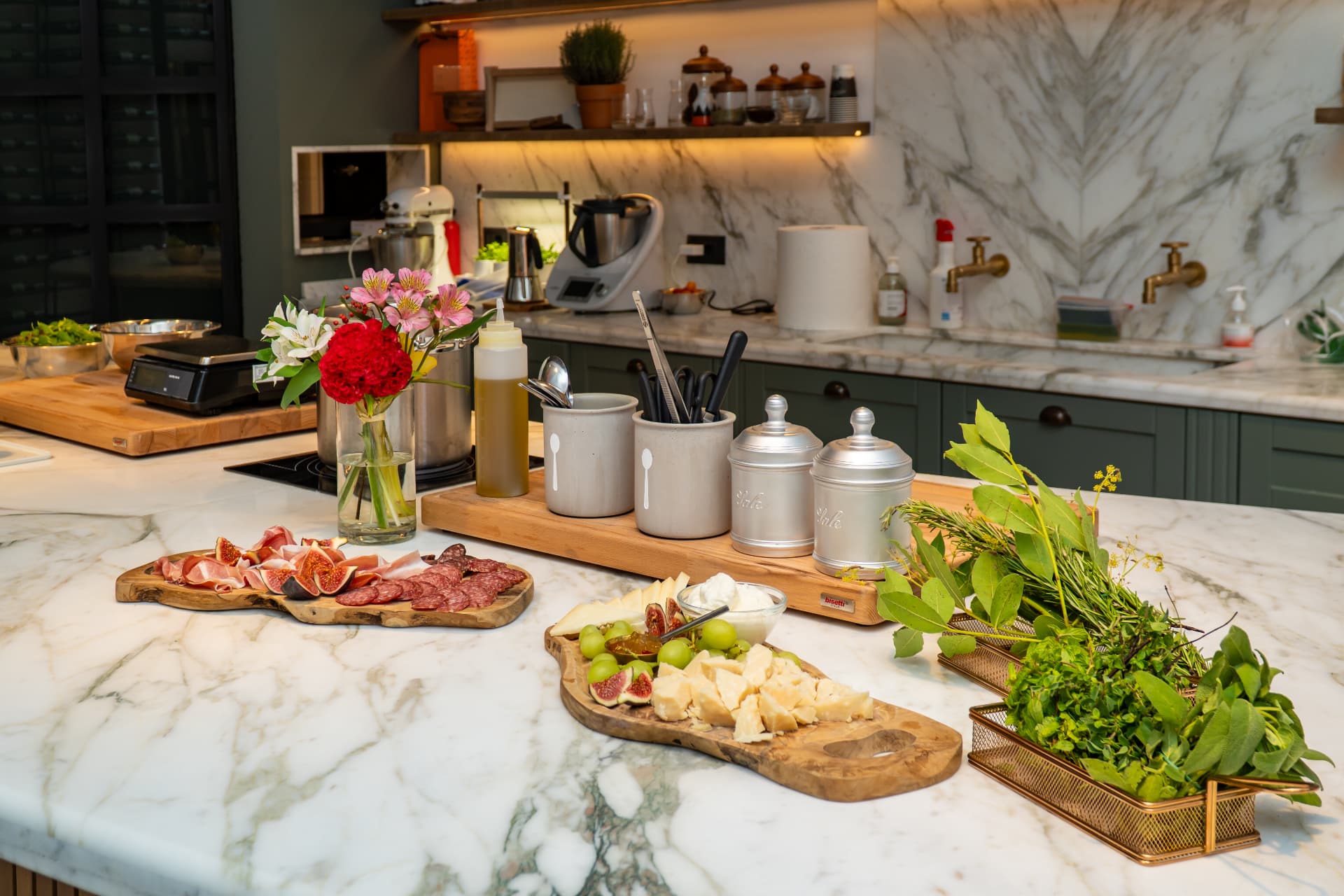
Living in Rome has changed the way I think about food. Not because I suddenly stopped eating pasta, pizza, or dessert. Quite the opposite. What changed was my understanding of why those foods can feel so different here.
The best meals here rarely feel complicated. They feel considered. A few good ingredients, a recipe that has been made for generations, and enough restraint to let each component taste like itself. There is much less anxiety around food and much more respect for it.
That is one reason I have loved exploring local cooking classes. They offer a way to understand the culture through the dishes people actually make, not just the ones served in restaurants.
Cooking in my own neighborhood
My husband and I recently took a pizza and gelato class at Enjoy Cooking in Sant'Angelo, the Roman neighborhood we were calling home. We could walk there, which immediately made the afternoon feel less like an activity on an itinerary and more like stepping into someone's kitchen.
We started with Roman staples, including supplì, fresh mozzarella, and a tasting of olive oils. The point was not to overcomplicate any of it. The quality of the ingredients did most of the work.
Pizza without the performance
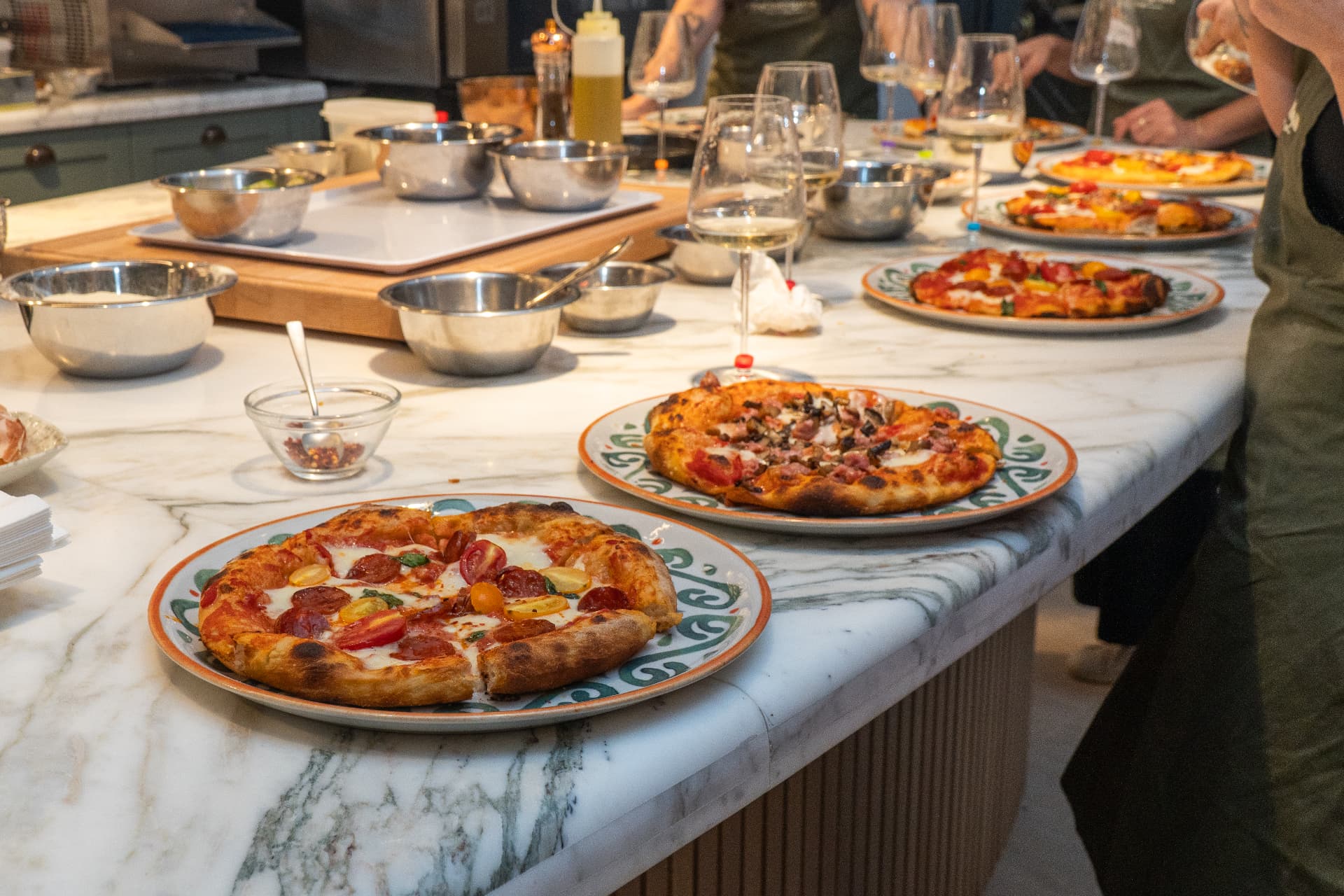
Making the pizza was the part I expected to be the most technical, but it was surprisingly intuitive. We worked the dough, chose toppings, and learned why the process matters as much as the final result.
What I liked most was that nobody treated pizza as a guilty pleasure or something that needed to be made healthier. It was simply food made well. The finished pizza felt satisfying without feeling heavy, which is something I have noticed again and again in Italy.
Then came gelato
We finished with gelato in pistachio, lemon, and raspberry. Watching it come together from scratch made something so familiar feel new again. The flavors were clean, bright, and unmistakably themselves.
Our instructor also gave the class context as we cooked, sharing stories about regional traditions and methods that have lasted because they work. Wine was poured, conversation moved around the table, and the class gradually became a meal.
“The best meals here rarely feel complicated. They feel considered.”
The part I wanted to remember
What stayed with me was not a single recipe. It was the ease of the afternoon. Italian food culture can look romantic from the outside, but the part I have come to appreciate most is how grounded it is. Eat what is in season. Buy the better ingredient when it matters. Do not hide it under too much. Sit down. Enjoy it.
For me, that has been one of the best lessons of living here. Eating well does not always mean eating less. Sometimes it simply means paying more attention.
Return to The Edit